
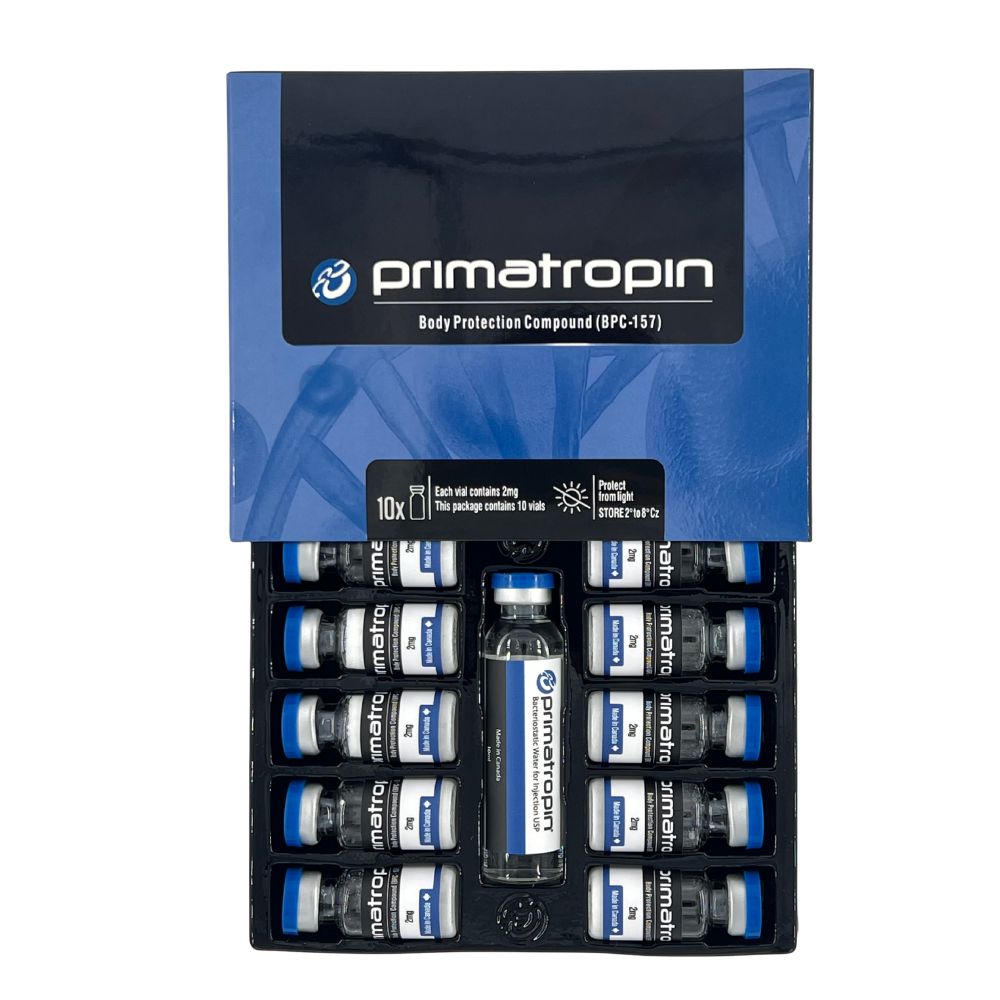
Primatropin – BODY PROTECTION COMPOUND (BPC-157)
Original price was: $300.00.$285.00Current price is: $285.00.
Specifications
Primatropin 20mg Body Protection Compound (BPC-157) 2mg/vial x 10 vials (1 kit) •100% Canadian VISIT primatropin.ca
WHY IS BPC-157– PRIMATROPIN RIGHT FOR YOU
What Is BPC-157?
Standing for Body Protecting Compound, BPC-157 is an entirely natural, healing-promoting peptide that delivers miraculous effects. When administered into the body, BPC-157 promotes the healing processes that aid your body’s recovery, especially your connective tissues like tendons and ligaments.
BPC-157 is composed of 15 amino acids isolated from human gastric juice. So yes, this pharmaceutical comes from our stomach! That’s why BPC-157 is 100% natural and provides various consistent and well-tolerated benefits to the human body.
Tendon and ligament injury is one of the most common injuries in sports. In professional athletes, the constant, high-intensity physical activity causes tears in these connective tissues at a microscopic level. Aged people whose body has been weakened through time may also suffer from wear and tear. These injuries, in return, force people to live in distress.
Unfortunately, the body’s connective tissues are typically hypo vascular, meaning that they are not connected with adequate numbers of blood vessels. This lack of blood supply results in a deficiency of blood, nutrients, and oxygen when an injury occurs. As a result, any damage to these body parts requires much time to recover fully.
On this account, there is an urgent need for a peptide that accelerates the healing process. And here, the BPC-157 comes into play.
How Does BPC-157 Work?
Understanding the Healing Process
The healing process of any connective tissue consists of three consecutive stages: inflammation, regeneration, and remodeling.
* Inflammation is when the body notices the damage and sends the inflammatory cells to the injured site, preparing for the regeneration process.
* In the regeneration stage, the fibroblasts (the cells that build the fibers of the connective tissues) proliferate and produce collagens and glycoproteins to form the new tissues.
* The final stage of healing – remodeling – begins weeks after the onset of the damage. The role of this stage is to regain the maximum strength of the once injured tissue.
Regeneration is thought to be the most critical stage of the healing process since this is when the body gathers all the materials, like the fibroblasts and collagens, for the healing process.
Nonetheless, as mentioned above, the hypovascular nature of the connective tissues makes it challenging to utilize the fundamental “building blocks” of the bloodstream.
What Is the Right BPC-157 Dosage?
Basic dosage: 2.5-3.75 micrograms/kilogram of body weight/time/twice a day.
* Injections: insulin syringe twice a day into the injured area (injected BPC-157 must be diluted with bacteriostatic water).
You should take BPC-157 consistently daily for up to 3 months, then give it a break for one month.
Below is the BPC-157 single dosage based on body weight:
Example: A 90kg subject should dilute the 2 mg vial with 2 ml of bacterial static water and inject .25ml twice a day to receive 250 micrograms per dose
| Weight (kg) | 2.5 mcg/kg | 3.75 mcg/kg |
| 60 | 150 mcg | 225 mcg |
| 70 | 175 mcg | 260 mcg |
| 80 | 200 mcg | 300 mcg |
| 90 | 225 mcg | 340 mcg |
| 100 | 250 mcg | 375 mcg |
Does BPC-157 Have Any Side Effects?
Until now, research on BPC-157 is limited, and records for its side effects are not substantial.
Considering the short half-life nature of peptides, of which BPC-157 is an example, it can initially be that the agent is generally safe. Unlike hormones that stay in the body for a long time, peptides bind to the receptor of cells, cause a chemical reaction, then go away.
However, it is better not to overlook any possible side effects. If you take BPC-157 via an injection, you may get:
* Itchiness, pain, or numbness at the injection site
* Vein, muscle, or skin discomfort
* Higher blood pressure
* Increased water retention
* Unintentional weight gain/loss
* Tiredness
• Age: Effects of aging, such as impaired kidney function, can reduce excretion and increase toxic response (when your body can’t get the medication out of the bloodstream).
• Nutritional status: Previous and current food and drug experiences can affect how your body metabolizes Semaglutide.
• Sex: Your biological sex affects your body’s metabolism of the medication.
• Hormonal status (i.e., pregnancy): Maternal toxicity can negatively affect the fetus.
• Circadian rhythm: Administering medications at the wrong time of day can cause the
doses to elicit a toxic response.
All these factors influence how medications affect your system, how it processes them, and the severity of the side effects.10 That’s why there’s no blanket approach to starting dosages and progressions. Each dosing plan is unique to each person’s health situation and medical history.
Related products
Orals
Orals

Health Products

Shop All
Orals
Orals
On Sale
Injectables